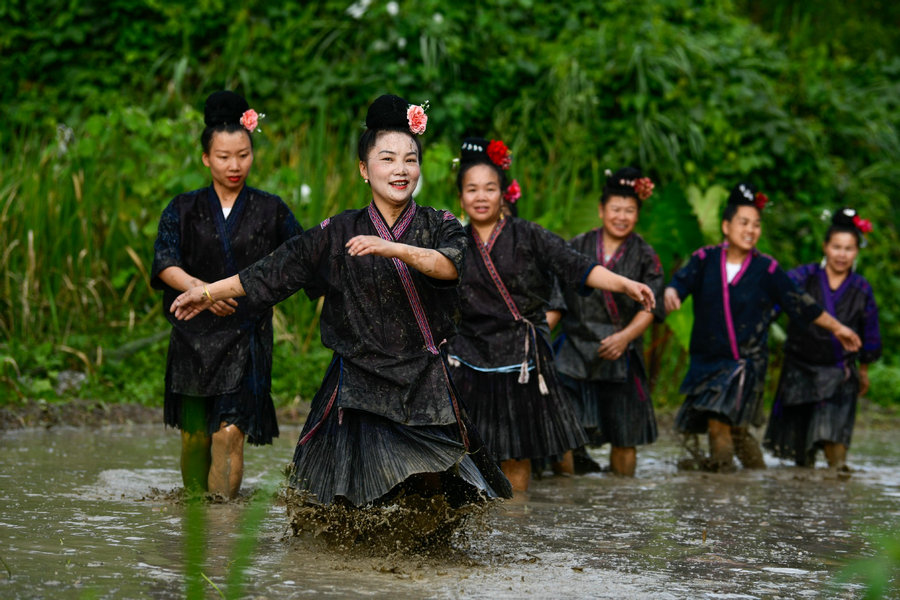
Water Drum Dance
Introduction
The Water Drum Dance, a traditional folk dance from Ruili city in Yunnan province, is a vibrant cultural treasure of the Deang and Miao ethnic group. Officially recognized as a national intangible cultural heritage in 2014, this dance reflects a deep cultural history spanning over 500 years. Renowned for its dynamic rhythm and captivating performance style, the Water Drum Dance integrates music, movement, and community celebration, showcasing the unique traditions and spirit of the region.
Historical Origins
Emerging during the agricultural cycles of the local communities, the Water Drum Dance evolved as a form of ritual and entertainment. The use of water drums originated in ceremonies to invoke blessings for prosperity and harmony. Over centuries, it transformed into a highly choreographed performance art, featuring intricate rhythms and vibrant dance patterns.
Features and Performance Style
The Water Drum Dance is distinct for its combination of drumming and dancing, where performers carry and play their instruments while executing intricate movements. The central performer, often the most skilled dancer, leads the group while playing the "elephant-foot drum", a cylindrical water drum measuring approximately 70 cm in height and weighing over 25 kilograms.
The rhythmic patterns are created by striking the larger drumhead with a mallet in the right hand while using the left hand to slap the smaller drumhead. The sound produced is deep, solemn, and short but resonates powerfully, creating an atmosphere of both intensity and celebration.
Performances often include additional percussion instruments such as large cymbals and bronze gongs. The dance forms concentric circles, with male and female participants alternating between inner and outer rings, stepping to the beat in a synchronized display of energy and grace.
Costumes and Props
Traditional attire for the Water Drum Dance features practical yet culturally symbolic designs. Performers wear black cotton jackets and trousers, often paired with a black headscarf that drapes over one shoulder. Footwear is optional, depending on the terrain, with many dancers performing barefoot to maintain agility and connection to the ground.
The water drum itself is a masterpiece of craftsmanship. Its hollow wooden body is carved from a single piece of timber, with the larger drumhead typically covered in animal hide. The drum's structure not only enhances sound quality but also reflects the ingenuity and artistry of the Deang and Miao people.
Cultural Significance
The Water Drum Dance is a vibrant expression of the Miao community's agricultural heritage, religious practices, and social values. Beyond its artistic appeal, the dance embodies the harmony between people and nature, a recurring theme in the local culture.
Its role in fostering community cohesion is vital. During festivals and communal events, the Water Drum Dance brings people together, enriching their cultural life and reinforcing shared traditions. It also serves as an educational tool, teaching younger generations about their heritage, rituals, and the value of collective joy.
The preservation and promotion of the Water Drum Dance not only safeguard a unique art form but also contribute to cultural diversity and intercultural understanding. Its captivating rhythm and dynamic choreography continue to inspire audiences, offering a window into the rich cultural tapestry of Yunnan people.








